History & culture
Three thousand years of Mediterranean history in one wooded peninsula.
Butrint is Albania's most important archaeological site and a UNESCO World Heritage Site — a layered city where Greek, Roman, Byzantine, Venetian and Ottoman builders each left their mark, now wrapped in a national park between a lagoon and the Ionian.
The layered city
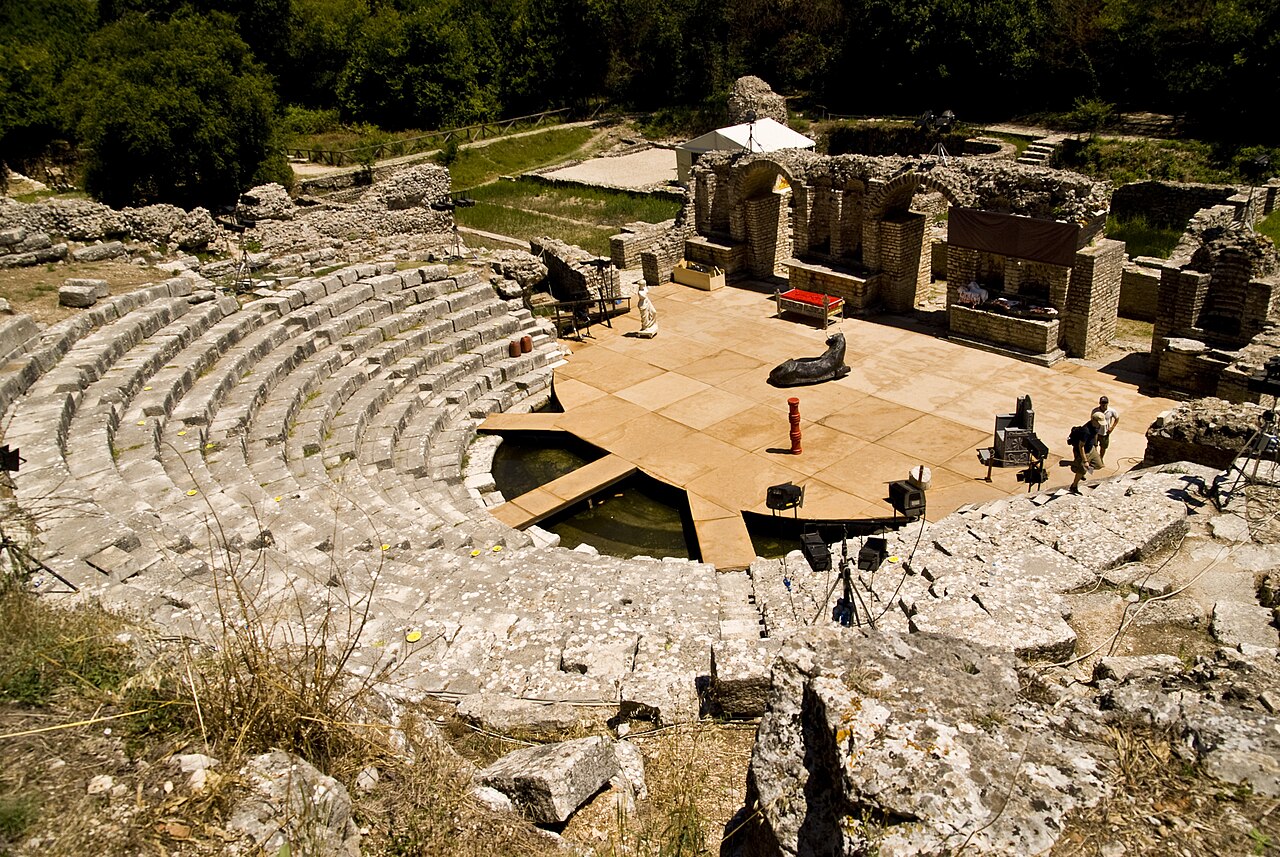
Greek colonists from Corfu settled Bouthroton by the 7th–4th centuries BCE, building a sanctuary to the healing god Asclepius and a theatre still used as a stage today. Rome made it a colony; the Byzantines added a basilica and a baptistery with mosaic floors; the Venetians and Ottomans fortified it. Walking from the Greek theatre up to the Venetian tower is a walk through every era of Mediterranean power.
A national park, not just a ruin
UNESCO inscribed Butrint in 1992, and since 2000 it has been a national park — the ruins sit inside wetlands, the Vivari Channel and the Ksamil islands, rich in birdlife and Mediterranean forest. It is an easy trip from Sarandë, about 20 km north.
Most archaeological sites give you one civilisation. Butrint gives you six in a single afternoon.