History & culture
A Greek-Roman city where the future Augustus went to school.
Apollonia, on a hill above the plain near Fier, was one of the most important cities of the ancient Adriatic — a place Cicero called a great and dignified city, and where the young Octavian (the future emperor Augustus) was studying when Julius Caesar was assassinated.
The ancient city
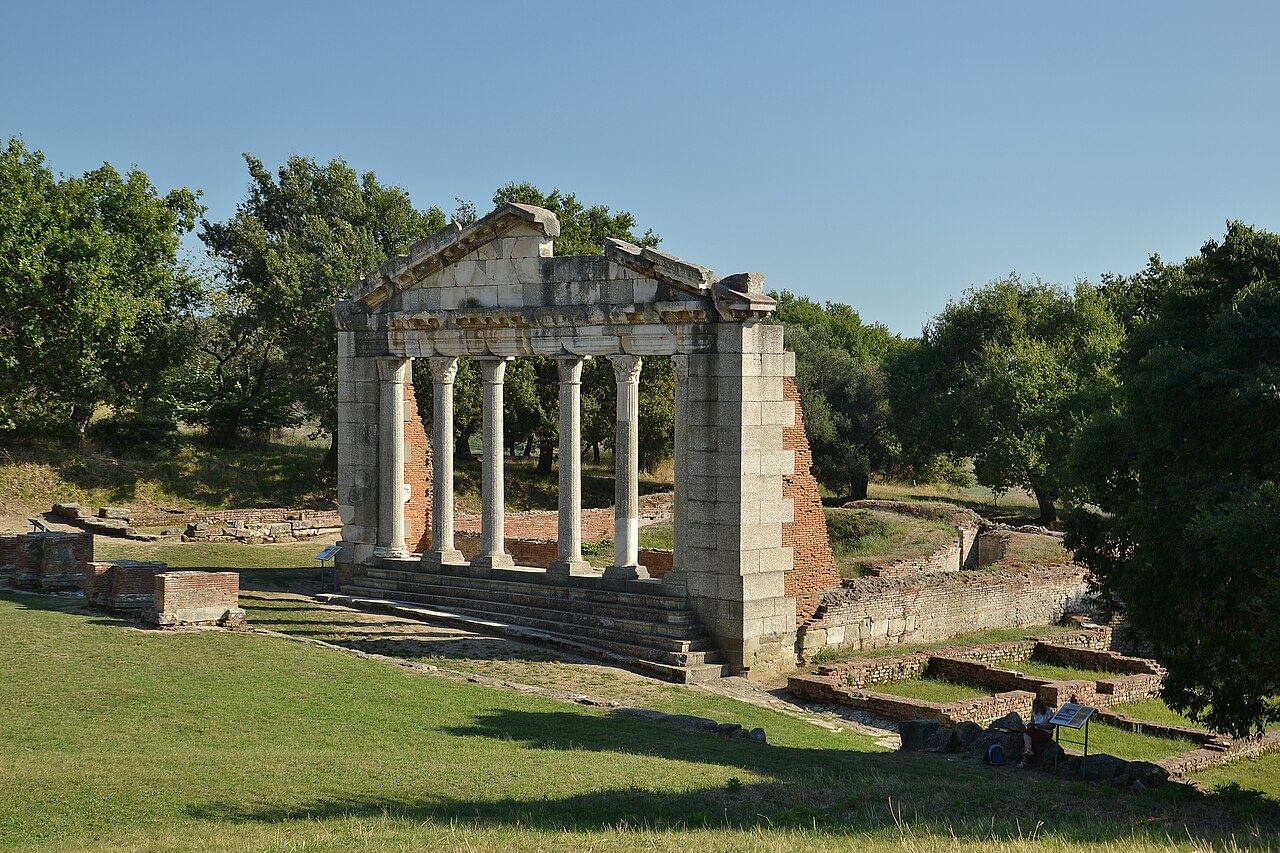
Founded by Greek colonists around 600 BCE, Apollonia grew rich as a port and seat of learning on the Via Egnatia. Its monuments — the restored façade of the bouleuterion (council house), the odeon, the library, the stoa and the theatre — spread across a large archaeological park still only partly excavated.
A monastery on the ruins
On the same hill stands the 13th-century Byzantine Monastery of St Mary, its frescoed church and cloister now housing the site museum. The image most visitors keep is exactly that juxtaposition — a medieval Orthodox monastery among classical Greek and Roman stone.
Quiet, rarely crowded, and one of the great classical sites of the Adriatic.